

By the numbers
Of perhaps more lasting value than Olaf from Frozen’s brief cameo during Jensen Huang’s keynote at GTC was his argument that we are at an inflection for inference. “For the first time, you don’t ask AI what, where, when, how. You ask it to create, do, build.” With this comes a step change in compute intensity.
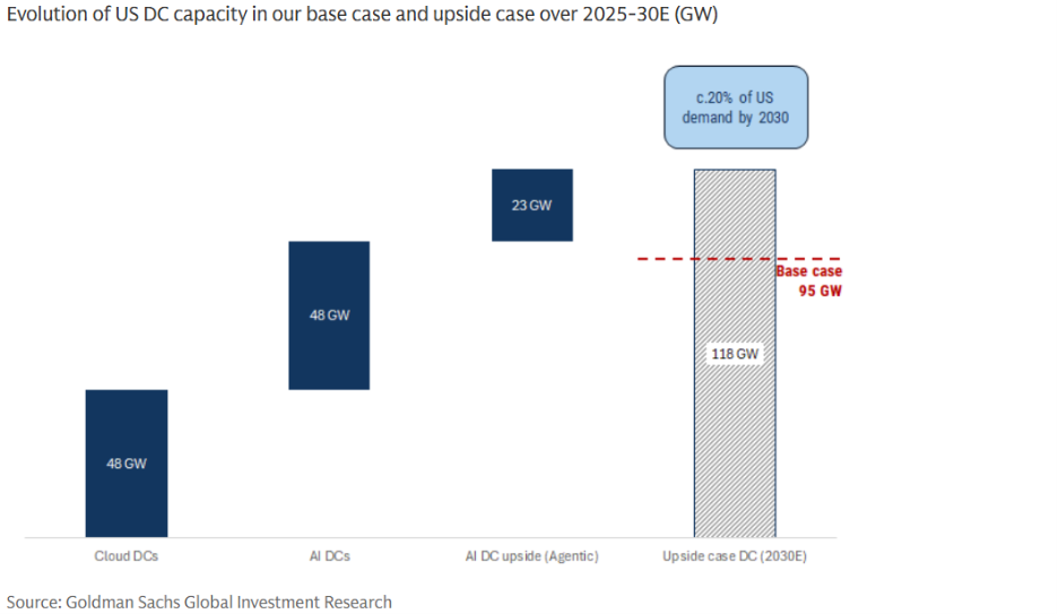
Agentic AI is the clearest expression of this shift and is much more energy-intensive than current chatbots: Goldman Sachs estimates that each ten percentage point increase in agentic queries versus its baseline projections boosts data center needs by roughly 25%.
A shift from training to inference also tilts the balance between capex and recurring usage, “It’s the difference between selling a car and selling gasoline. Training was the car. Inference is the gas. Agentic AI is everyone leaving their engine running 24 hours a day.” (Crazy Stupid Tech).
Blurred lines, conditional service
Reforms are underway across U.S. wholesale markets that will ultimately make it easier for large loads and generators to connect to the grid. In the near term, flexibility and a combination of behind-the-meter and front-of-meter is the clearest path to power. The blurring of lines here necessitates a revised approach from large loads seeking power. As our CEO David Crane wrote in the above Expert View, “Power systems are not binary. The future won’t be purely grid-connected or behind-the-meter. It will be an integration of both, stitched together over time, involving physical infrastructure across multiple markets and differing regulatory frameworks.” Behind-the-meter resources for instance will need to operate in a way that meets the needs of the grid, in contrast to the imagery of a power fortress standing isolated atop a hill. Getting this right requires ongoing and active engagement with regulatory processes to master and inform the proceedings. Let’s take a look at a few examples.
Large load energization approvals in ERCOT have largely ground to a halt ahead of the introduction of its new Batch Zero process, which is due to kick off in July. The exact eligibility criteria for inclusion in Batch Zero are still being developed but ERCOT published proposed rules on March 14th. At a minimum, to be included in Batch Zero for reliability assessment and to be allocated capacity, a project must have signed an intermediate agreement with the relevant utility and have received ERCOT approval of a steady state or stability study by July 24, 2026.
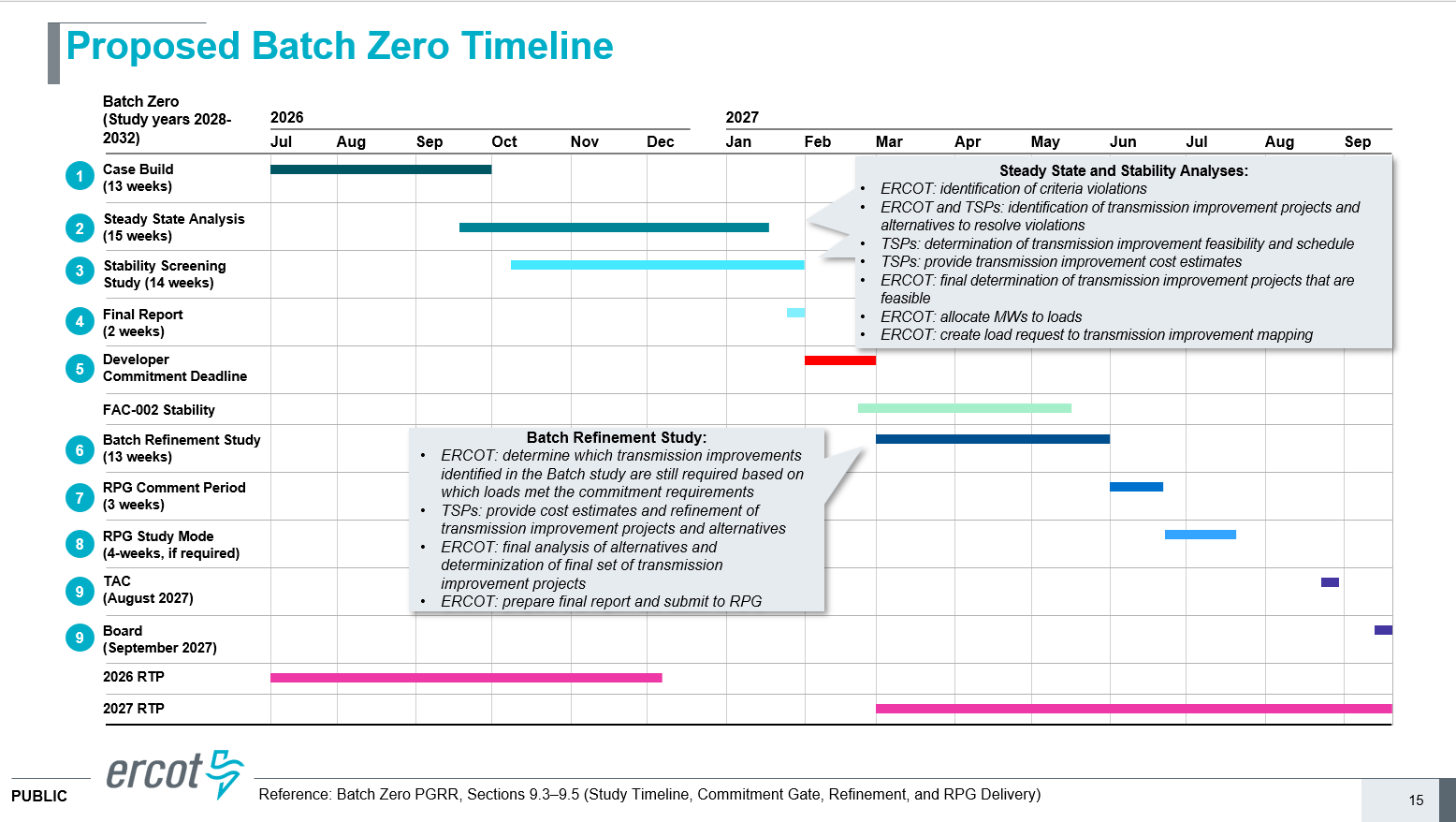
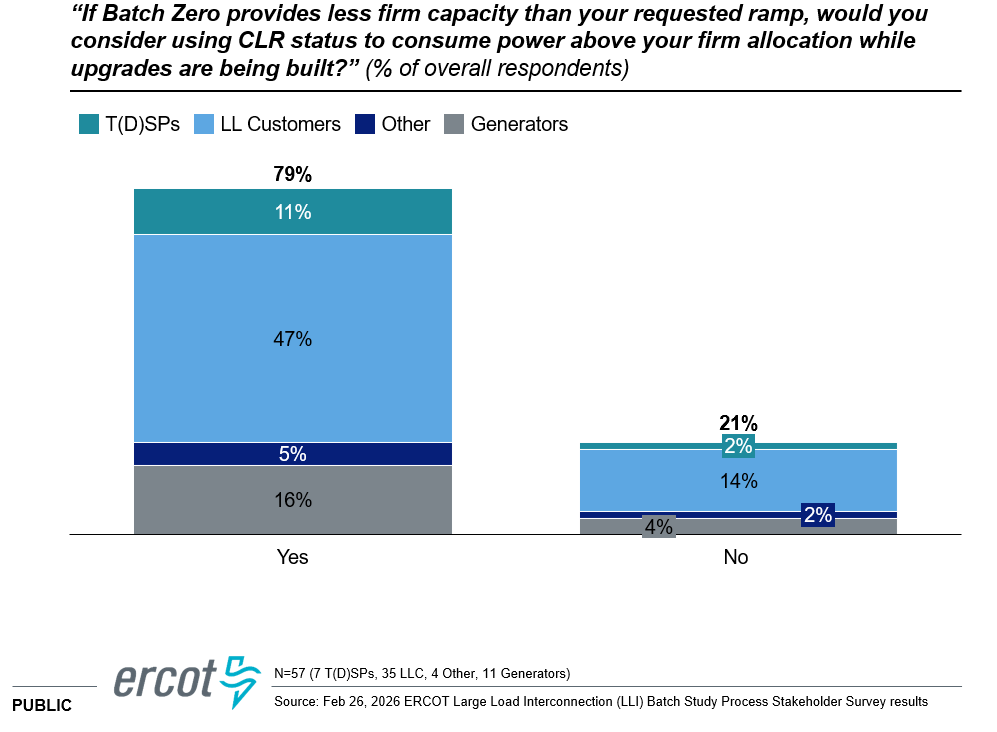
Kicking off this process is a major step forward for ERCOT but the energization date for many projects studied in Batch Zero could still be years away. This opens the door for conditional or non-firm service from the grid. Large loads in ERCOT cannot currently be studied as being curtailable. Instead they must be studied as receiving firm transmission service during grid peak. Under this setup, there is no benefit from a study perspective for a load with a bilateral arrangement with a generator or battery, even if the projects are co-located behind the meter. Changing this requires a mechanism that lets large loads signal to the grid that they can flex. ERCOT’s ‘Controllable Load Resource’ (CLR) is the closest existing construct. It is currently an operational mode that allows load to be dispatched down in real-time by ERCOT to zero or to an agreed upon minimum value. CLR is not though a mode against which a project can be studied. This is hopefully set to change. This would ideally allow the projects to be interconnected sooner because they are taking ‘as available’ transmission service and therefore would not necessitate transmission upgrades. CLR is fairly popular based on feedback presented in a recent ERCOT workshop, where 79% of respondents said they would consider using CLR status if Batch Zero provided less firm capacity than their requested ramp.
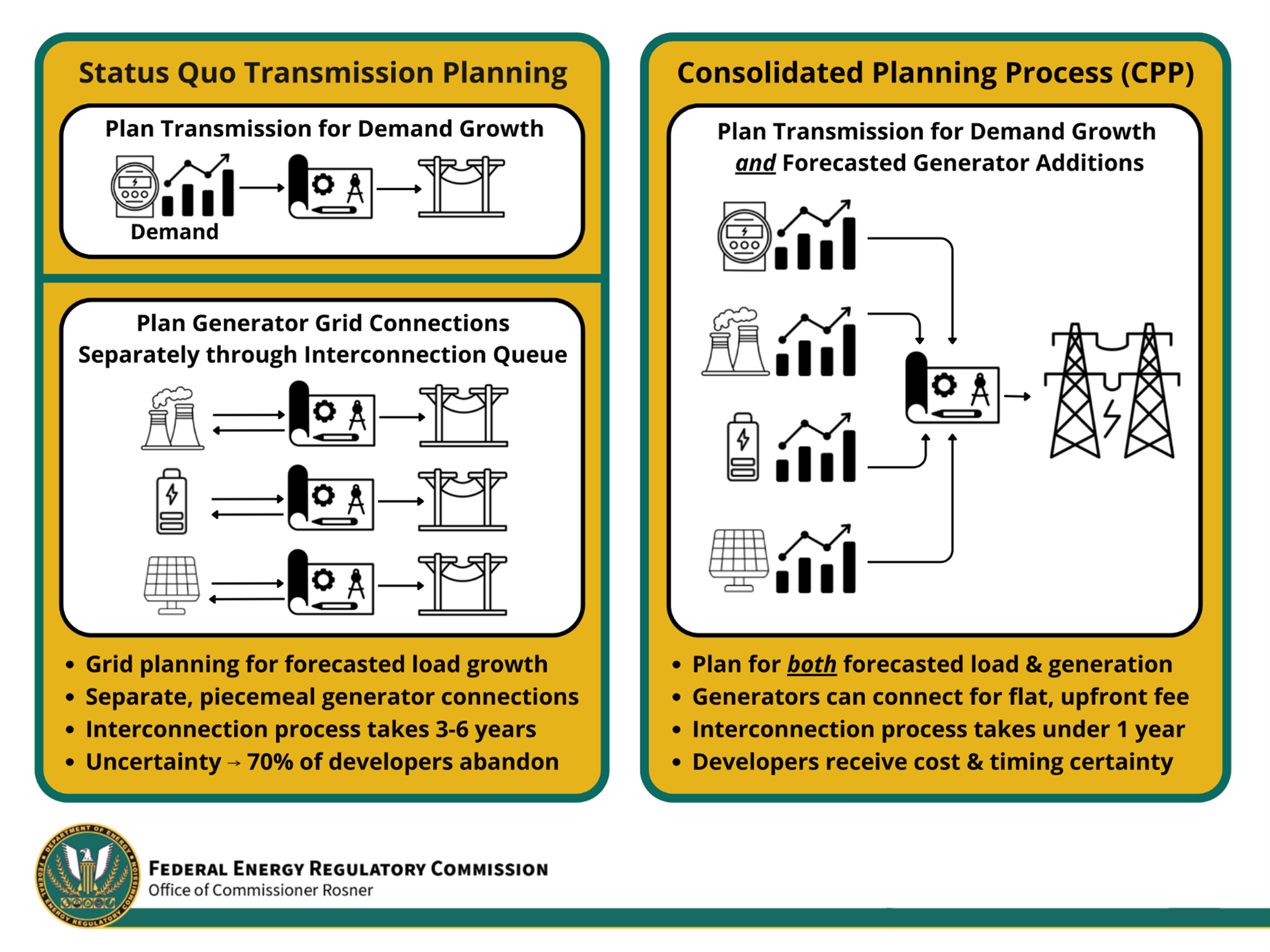
Elsewhere, FERC approved SPP’s Consolidated Planning Process (CPP) earlier this month, which aims to improve cost transparency and reduce study timelines. The CPP will identify areas with available or planned transmission capacity, called Planned Interconnection Locations (PILs), and assign standardized per-megawatt interconnection costs (“Generalized Rates for Interconnection Development Contribution” or GRID-C). These rates reflect network upgrade costs and provide clearer price signals for developers. The first CPP queue window opens in April, with initial rates expected this fall. The process has been lauded by FERC and if successful, flavors of it could be adopted by other markets. SPP is also already beginning Phase 2 CPP planning, which would incorporate large load cost allocation into the combined planning process.
SPP is the first market to really combine transmission planning and generator interconnection into a single process as it strives to overcome the bottlenecks. The approval of CPP is however both a positive step forward and testament that most market solutions have extremely long timelines before you see a loosening of constraints: SPP began working on transmission reform that led to CPP in 2020 (Utility Dive). Hence the need for market participants to take interim measures.
PJM has its own (or several) long lead-time processes. Its Reliability Backstop Procurement (RBP), a one-time special auction designed to ensure sufficient supply, is unlikely to alleviate near-term reliability issues as most chosen projects are unlikely to materially affect system conditions until the early 2030s.
A more immediate, albeit interim, solution is its Connect and Manage framework, which would allow data centers to connect if they accept curtailment before pre-emergency demand response deployment. Analysis in response to the proposal’s release found curtailable data center loads could reduce costs for consumers in the near-term (2028). Data center stakeholders are pushing for optionality via exemptions to connect-and-manage for loads tied to “qualifying new generation” (BYOG).
On March 25, PJM stakeholders approved moving forward with Connect and Manage issue charges, and were presented with the BYOG issue charge. A task force for Connect and Manage will begin March 31 with a final proposal expected by August. BYOG proponents aim to advance their proposal next month, and to have the proposal addressed in advance or at least concurrently to connect and manage to build it out as a feasible alternative.
Many of these proposals are directionally positive, but the details make or break them and the initial pass was not encouraging. Stakeholder filings are of course part of a negotiation, but the feedback was fairly direct: “These proposals will not enable commercially viable arrangements,” the Data Center Coalition said in a filing Wednesday. Or in the words of Jesse Jenkins, ‘PJM must do better.’ (LinkedIn)
Criminally cheap gasoline
The U.S.-Israeli war on Iran is forcing energy rationing across much of Asia and parts of Europe, driven by the disruption of oil and LNG flows through the Strait of Hormuz. In the U.S., an energy exporter, the impact is narrower, but has pushed gasoline prices up to $4/gallon. As a UK commentator on the Page94 Podcast remarked recently, “American gas prices have gone from insanely cheap to criminally cheap”. Nonetheless, vast expanses, fuel inefficient cars and charged politics ensure that gasoline price spikes are keenly felt. “The salience of the gas price is further pumped up (pun intended) by two features as to how it is marketed and sold. First, I can’t think of another good whose price is broadcast on giant electronic signs on every other American street corner, so that one could not ignore the price if one tried. And second, I can’t think of another product which shows you in real time (at the pump) your wallet draining away as you watch. Painful.” (Car Charts).
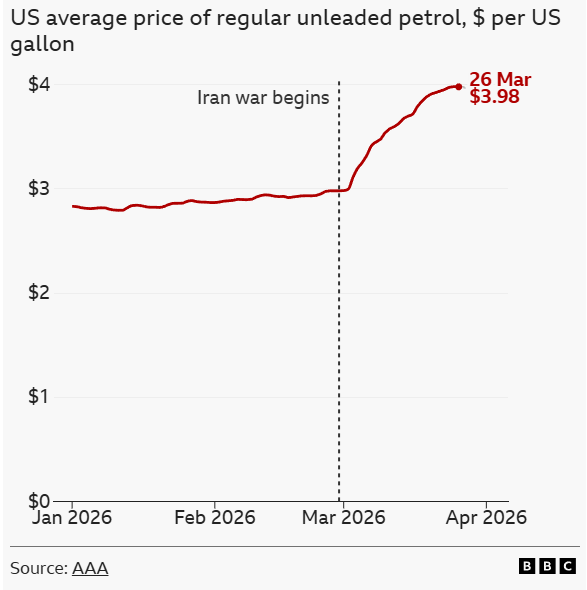
Gasoline tends to be a greater share of US wallets than electricity prices. Back in September we wrote “cost of living concerns, in particular electricity prices, are front of mind for many U.S. voters but two issues make it a harder line of attack for Democrats. For starters, the average gasoline price is down 10% in real terms in 2025, which makes up for recent electricity price increases.” (Who to blame for your electricity bill?) The rise of gasoline prices and electricity prices at the same time comes at a poor time for data center developers and hyperscalers as upward pressure on electricity rates is being tied directly to the question of how we power the data center boom and who is going to pay for it.
This further elevates the importance of community engagement for data center companies. As President Trump recently said, ‘They need some PR help’, and they also need partners experienced at working with local communities. Most of the discussions to date have been around rates, water use, jobs and taxes and the like. More recent examples get into the minutiae of how these firms engage with communities, such as Microsoft ending the use of NDAs with local governments in an effort to ‘increase transparency around its data center developments’ (NPM). Just as data center firms need to secure power not just for day one but for the life of these projects, community engagement is not a one-and-done effort. The real work begins after you tie the knot.
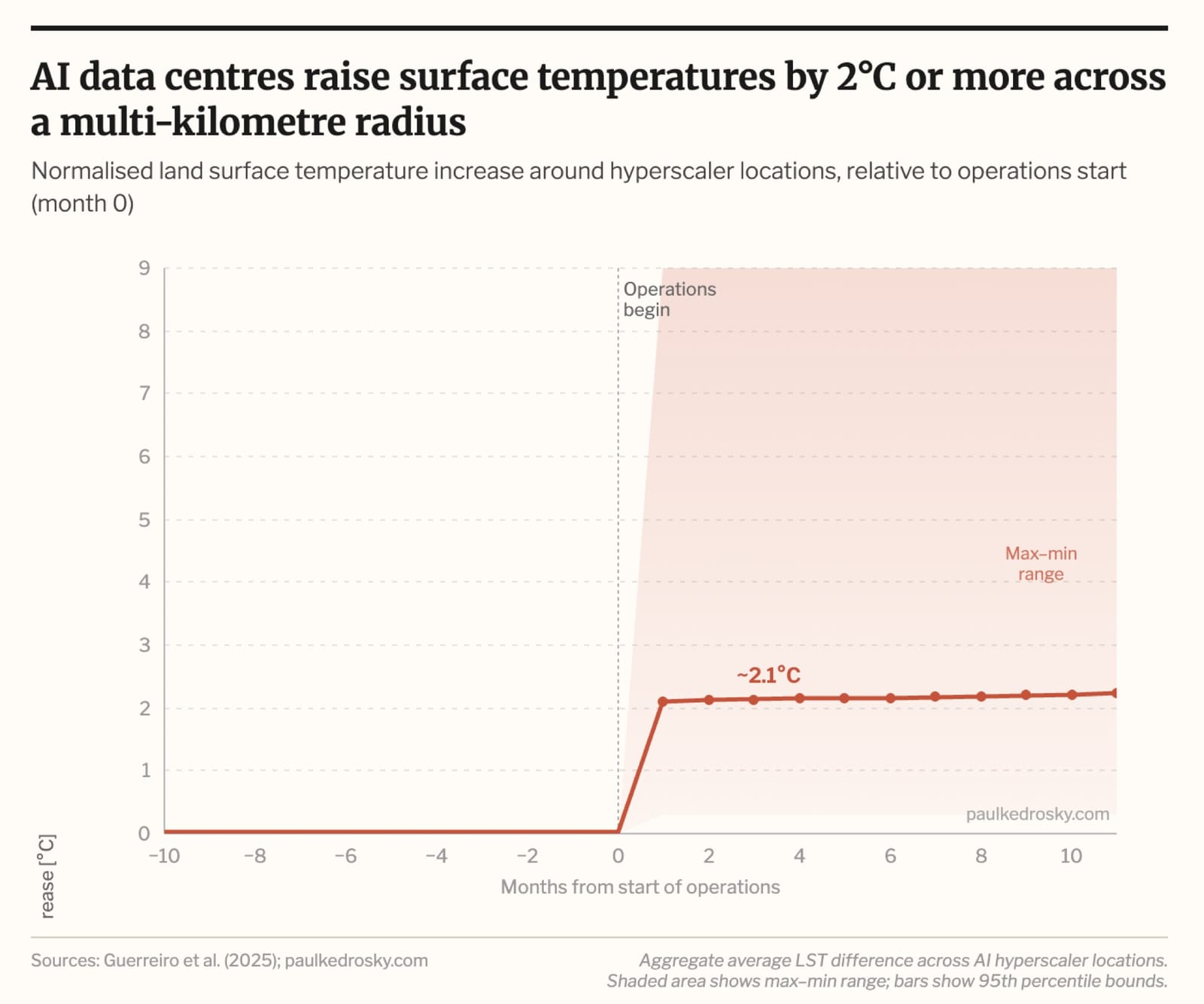
This is especially true as we better understand how data centers affect their local environment. “A new pre-print from researchers at Cambridge, NTU, and NUS uses satellite measurements of temperatures near AI hyperscaler locations worldwide and finds a consistent, sharp effect: within a month of a data centre coming online, land surface temperatures in the surrounding area rise by an average of 2°C and stay there” (Paul Kedrosky). The findings are striking if they hold up.
More newsletters
August 2026 Newsletter
Recent reporting on equipment failures and power interruptions at several early off-grid data center projects highlights genuine technical and financial risks. Furthermore, no one has enough operating history to understand how the equipment will hold up. This suggests that things will get harder before they get easier. This is not, though, a blanket argument against on-site power. It is an argument for engineering these systems differently, for engaging with a community differently.
Read moreJuly 2026 Newsletter
The data center industry continues to surprise both in terms of how quickly the status quo can change, and how resolutely many stakeholders assume the current status quo is now fixed. Eighteen months ago, fully islanded projects were more speculative than real, hyperscalers’ decarbonization bona fides were still mostly intact, and permitting was largely a formality if you followed process. Each looked settled right up until it wasn't, and expecting stability now is a curious leap.
Read moreJune 2026 Newsletter - AGM Edition
We hope to see many of you at our AGM this coming week, but in the meantime, here is the latest on what’s happening at the nexus of AI demand and energy. Both Generate and this newsletter have come a long way since our first post in September 2024. Generate is now focused on what our CEO David Crane recently described as “the single defining factor in the future of our industry – AI demand is accelerating faster than the infrastructure needed to support it.”
Read more