

Our read
Data center financing remains widely available, but it is getting more selective, more conditional, and more expensive. Investors and lenders are also increasingly aware that despite the diversity of projects across the country, the revenues and credit flow back to a handful of companies. The dance between developers, customers, investors and lenders increasingly resembles an Eightsome Reel: energetic, seemingly chaotic but actually highly structured and unforgiving of a missed step.
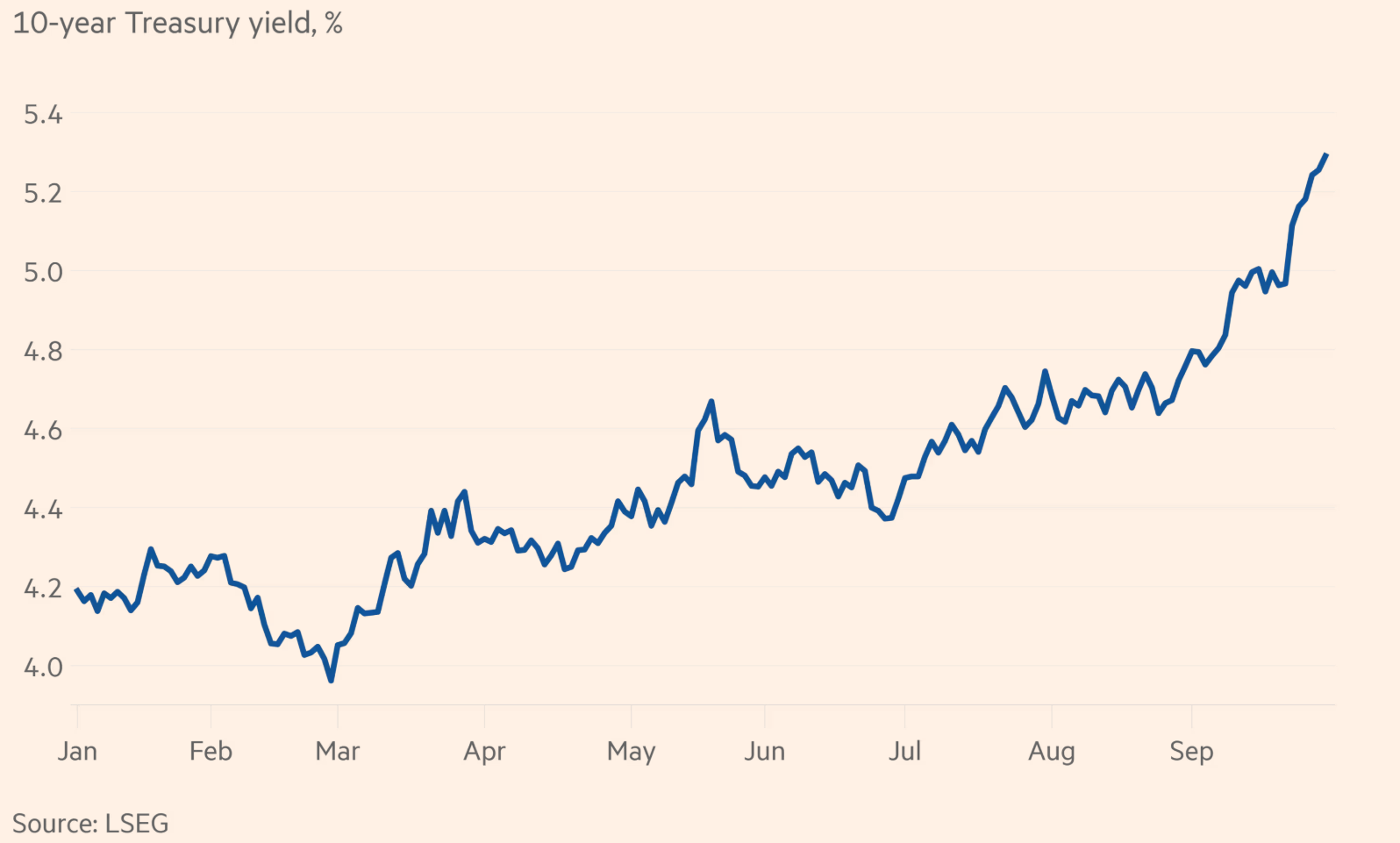
The financial markets are reacting to several dynamics. Many of the power projects being built to serve that demand are first of a kind, whether in structure, scale or technology; AI demand is explosive but close to impossible to forecast; government yields are climbing, with the 10-year Treasury briefly rising to 5.34%, its highest since 2002; and hyperscaler capex, forecast to exceed $1 trillion next year, is testing the depth of debt and equity markets. Unlike the reel, whose steps have changed little in a century, the form and fundamentals of data center financing are much more fluid. As Benedict Evans put it: the most dangerous words in investing are “this time is different”; the seven most dangerous words are “people always say ‘this time is different.’ It’s always different.”
Power infrastructure financing: liquid, selective, sensitive
Capital for power infrastructure is plentiful, but investors are more selective and more sensitive to risk in a market that is still writing its own rules and experimenting along the way. At Barclays’ recent CEO Energy-Power Conference, “panelists generally characterized capital markets as liquid and investor interest in power infrastructure as strong […] Higher rates have increased the cost of capital for infrastructure businesses, while investors are placing greater value on contracted revenues, credible counterparties and replicable project structures. (Barclays). The final point here is fascinating since so many of the project structures are so novel, at least on the power side. Many of the deals being done today are among the first to be done ever (especially at this scale), even though they often build on previous templates.
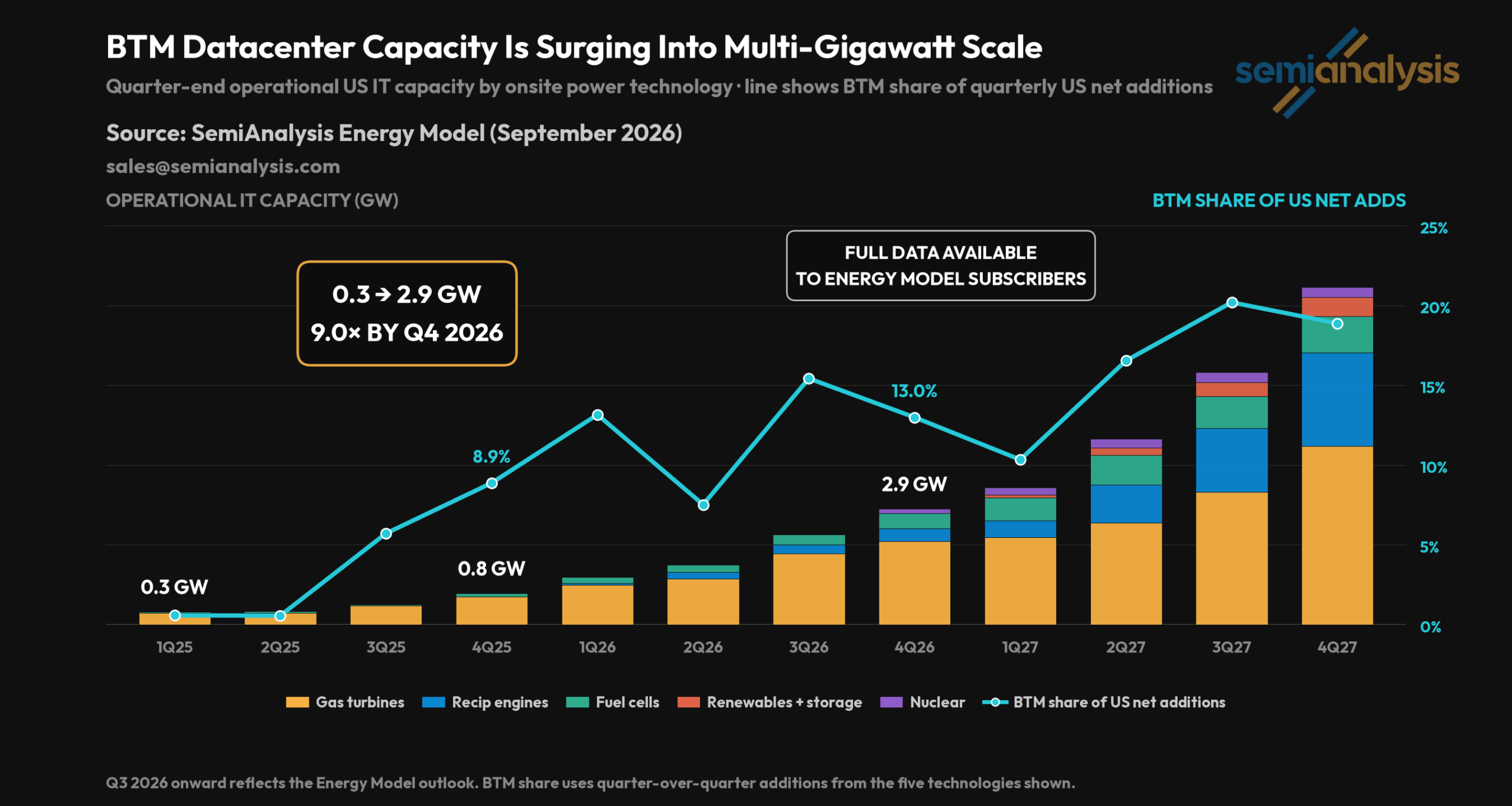
This applies to both behind-the-meter and grid-connected projects. Behind-the-meter data center capacity grew 9x from Q1 2025 to Q4 2026 (SemiAnalysis). There is considerable operational and construction experience behind many of these projects, but this is a new market. This makes people highly sensitive to every single incident, any new data point. Oracle’s move this month to invoke force majeure at the 2.45GW Project Jupiter data center in New Mexico was one such incident, prompting more scrutiny of pre Ready for Service risks (NPM, Bloomberg).
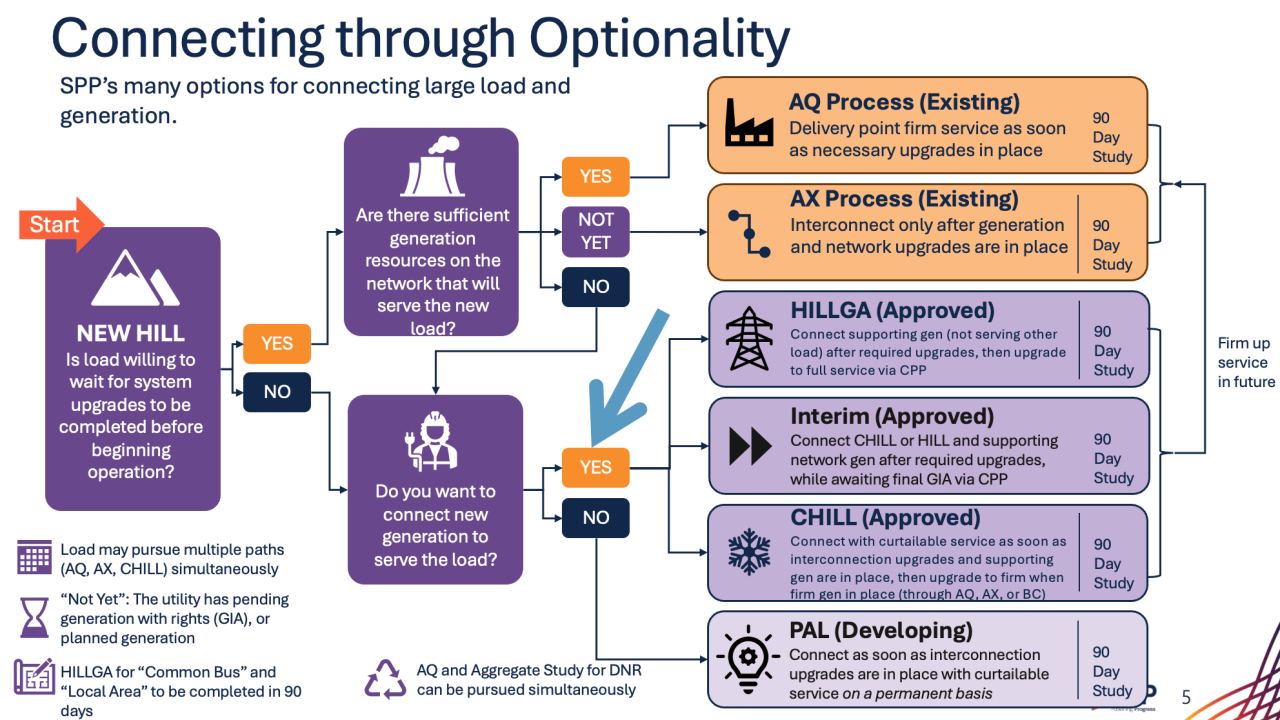
The landscape for grid-connected projects is also changing rapidly, with motivated parties (including Generate) combining to accelerate the interconnection of flexible, grid-enhancing data centers with the launch of the AI Energy Management Alliance. Our hope is to further advance these options so data centers can connect to the grid quickly and the benefits flow both ways: reliable power for the data center and a more reliable grid; lower costs for the data center and better affordability for ratepayers; lower emissions for the company and a cleaner grid. It’s early days but the efforts builds on a strong foundation. SPP for instance has different pathways for customers with existing generation, planned generation, flexible service needs or generation of their own (Goff Policy). This is promising, but it’s new, and often hard to untangle. For lenders and investors, it also means a new risk vocabulary around conditional grid service, curtailment, private firming, co-location and cost allocation.
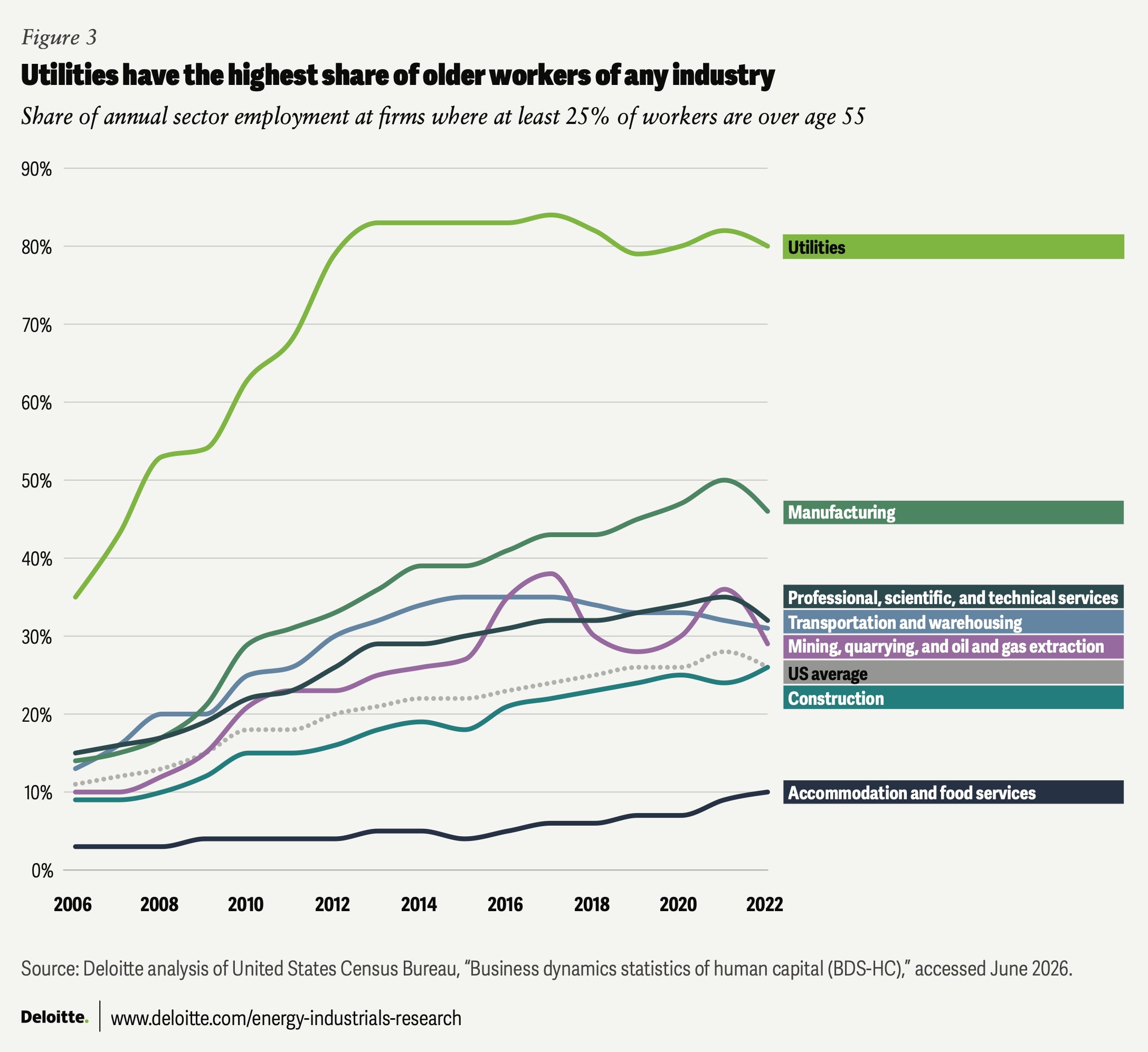
Everything in this industry is changing fast, except the age of the people doing the work. Much of the AI jobs debate centers on white-collar losses, with older workers seen as most exposed to tools they are less comfortable with. In power, the opposite is true. A new Deloitte study shows the ratio of older workers to younger ones in the sector is more than double the economywide ratio. Older workers are the backbone building or connecting this infrastructure. That experience is an asset, but it runs into the same problem facing lenders and investors: these projects look unlike anything the people building, and financing, them have done before.
Data center Duolingo
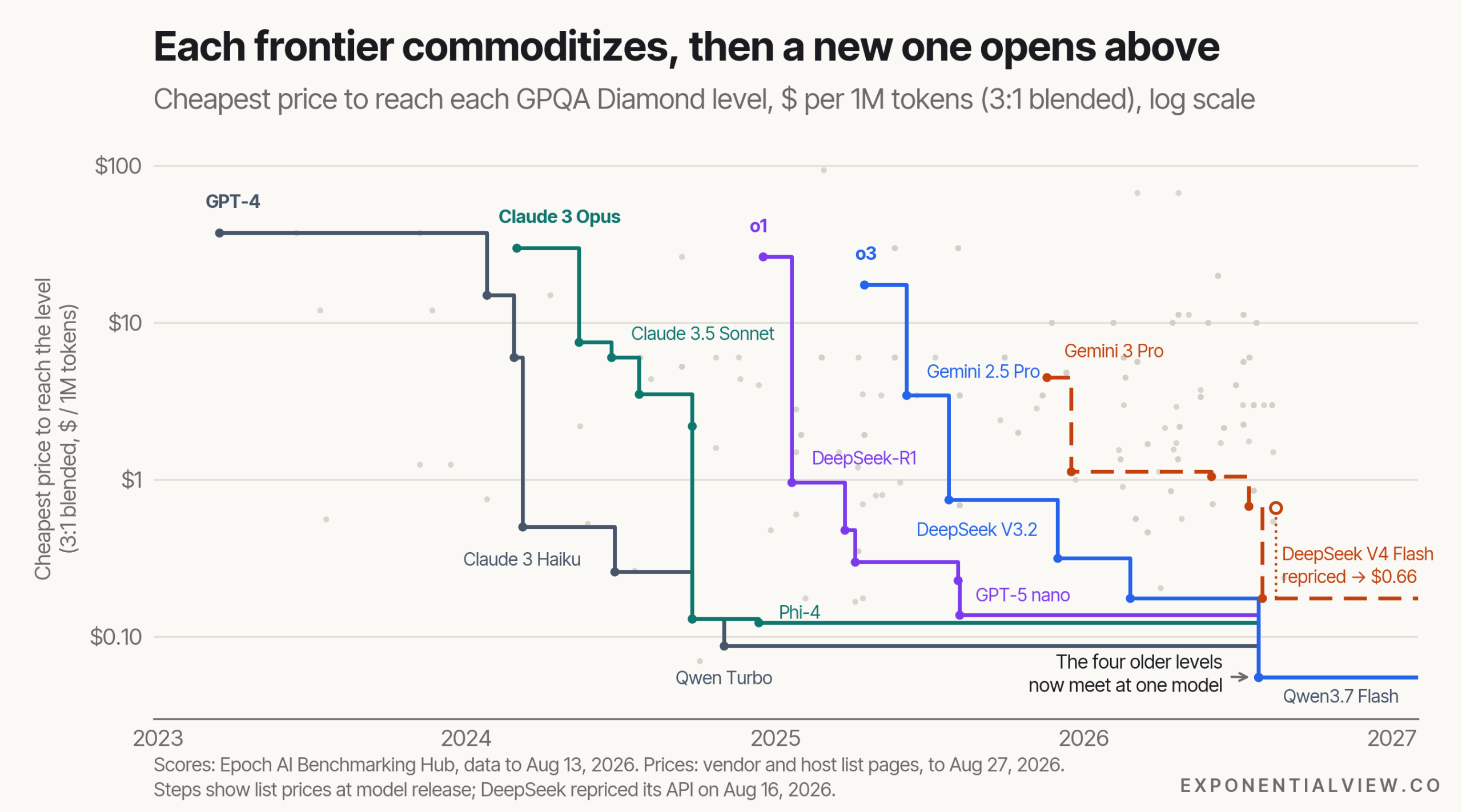
In 2024, climate veteran investor David Yeh published a venture capital to project finance Duolingo, a cheat sheet for companies outgrowing their early backers. He neatly articulated the contrasting mindsets, with VCs exhibiting a “swing for a home run” mentality versus a “play it safe, don’t strikeout” approach. We observe a similar mismatch in the data center market today, where a fixation on speed at all costs is a poor bedfellow to investors underwriting assets with multi-decade lifecycles. This is exacerbated the fact that each frontier of AI capability is swiftly commoditized only for a new pricier frontier to open up above it (Exponential View).
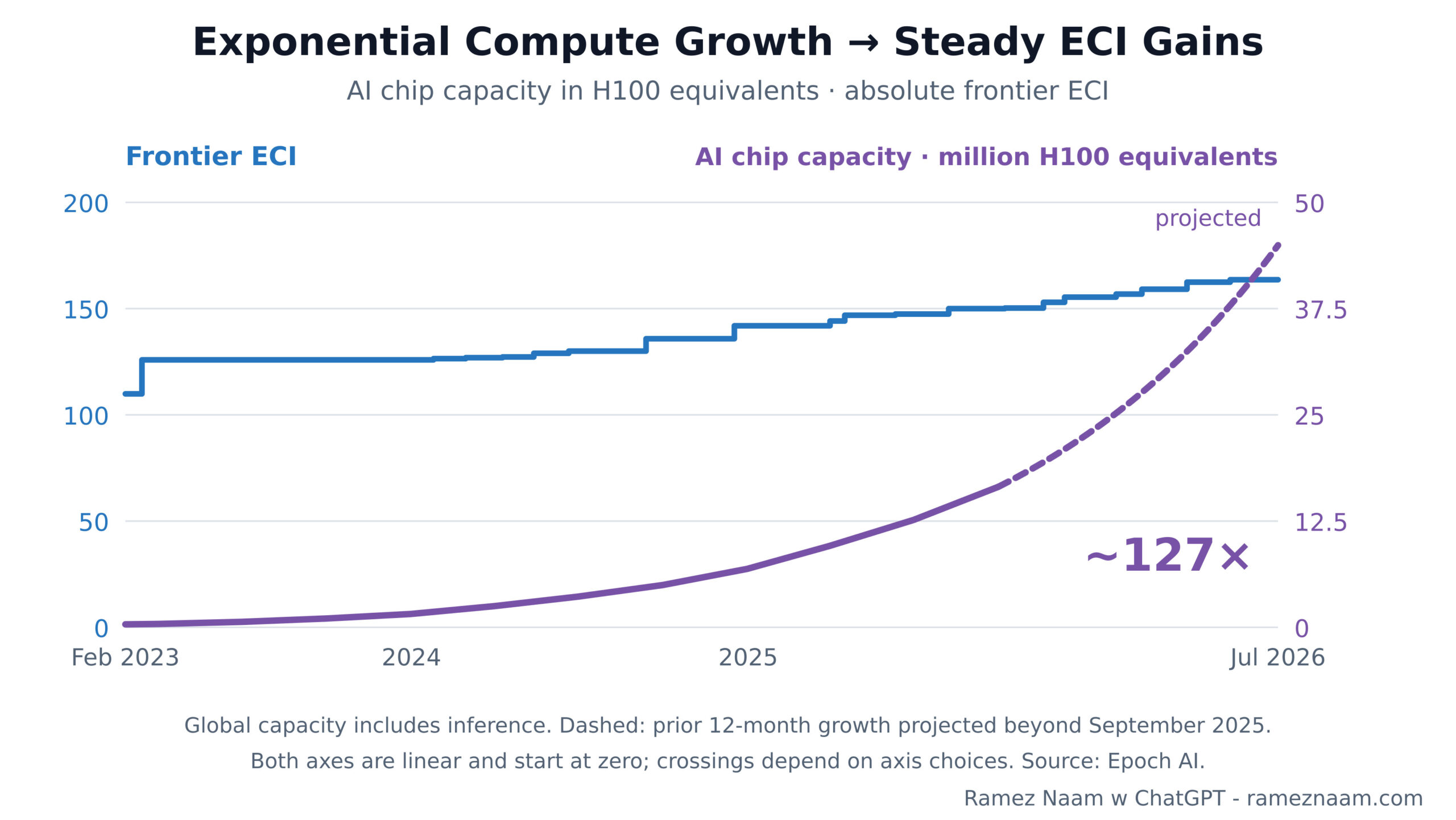
Recent model advances are remarkable, both from reported data and personal experience, but these gains in measured capability, as defined by the Epoch Capabilities Index (ECI), have required vastly more computing capacity (Ramez Naam). That is the ratio lenders keep returning to: if each gain in capability needs vastly more compute, will revenues grow fast enough to pay for it?
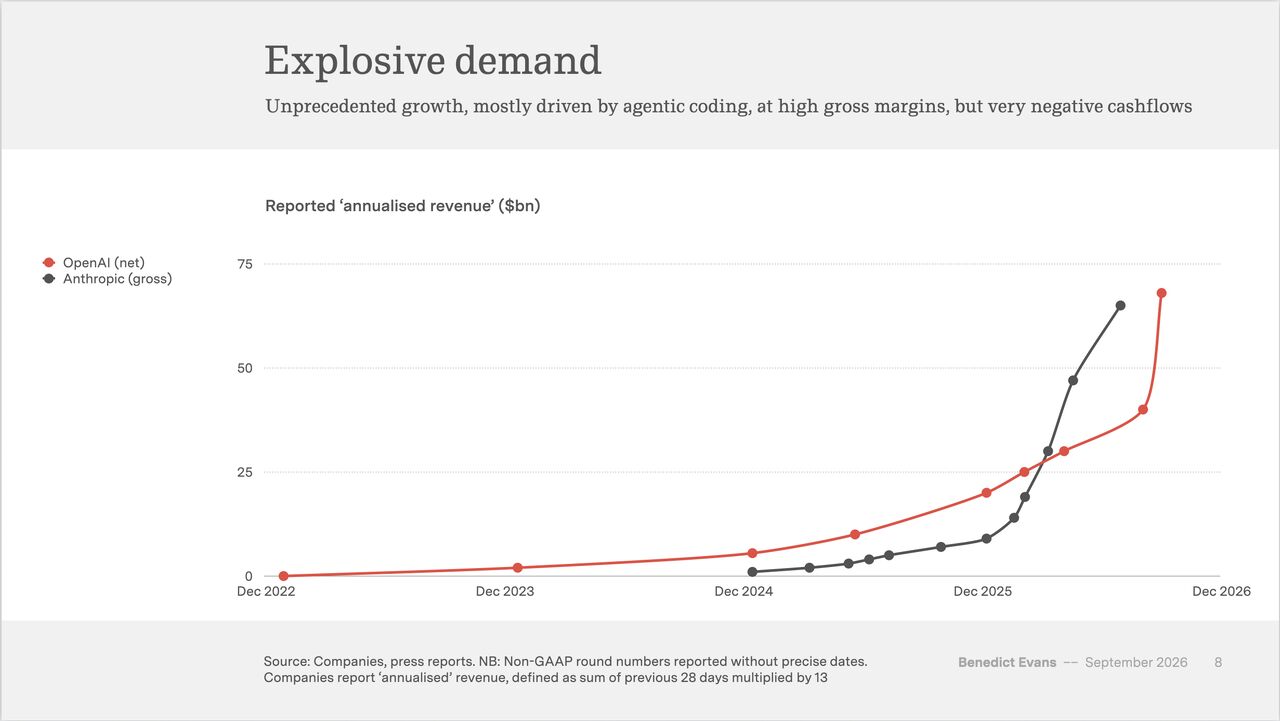
Reported revenues highlight the other core tension here: unprecedented growth, at very high gross margins, but very negative cashflows.
Capital costs and availability
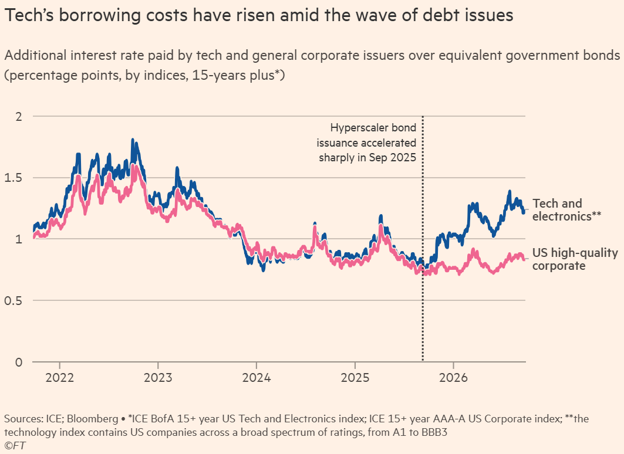
Yields on 10-year U.S. Treasury notes this week reached their highest level since 2002, which in turn sets the floor for interest rates on corporate debt. Tech’s borrowing costs above this have also have risen amid the wave of debt issues (the Financial Times).
It is not clear which kinds of investors will be able to collectively provide the amounts of financing being sought after. At the AI Agenda event in San Francisco, the head of Blackstone’s AI focused investment team was clear on this front, “We have some hypotheses, but the honest answer is we don’t know where all of it will come from.” (The Information). He pointed to investment grade debt and private credit as likely sources, and the public bond markets are already absorbing a lot. Data center financings have increased across the Investment Grade and High Yield markets over the last couple of years and make up a growing share of total issuances: AI-related investment grade issuances, which are up 70% year-on-year, are forecast to make up 34% of the corporate market by year end (Citi). The quality of the tenant, power availability, operator risk, and structure are key considerations for IG data center financings. Public equity markets are also being tested. After SpaceX’s $85.7B raise in June, Anthropic is reportedly targeting a $1.8–2T valuation as soon as November, and OpenAI is reportedly in talks to raise $30B at a $1.4T valuation. Nscale and SB Energy are also heading to market, although at valuations beginning with Bs not Ts.
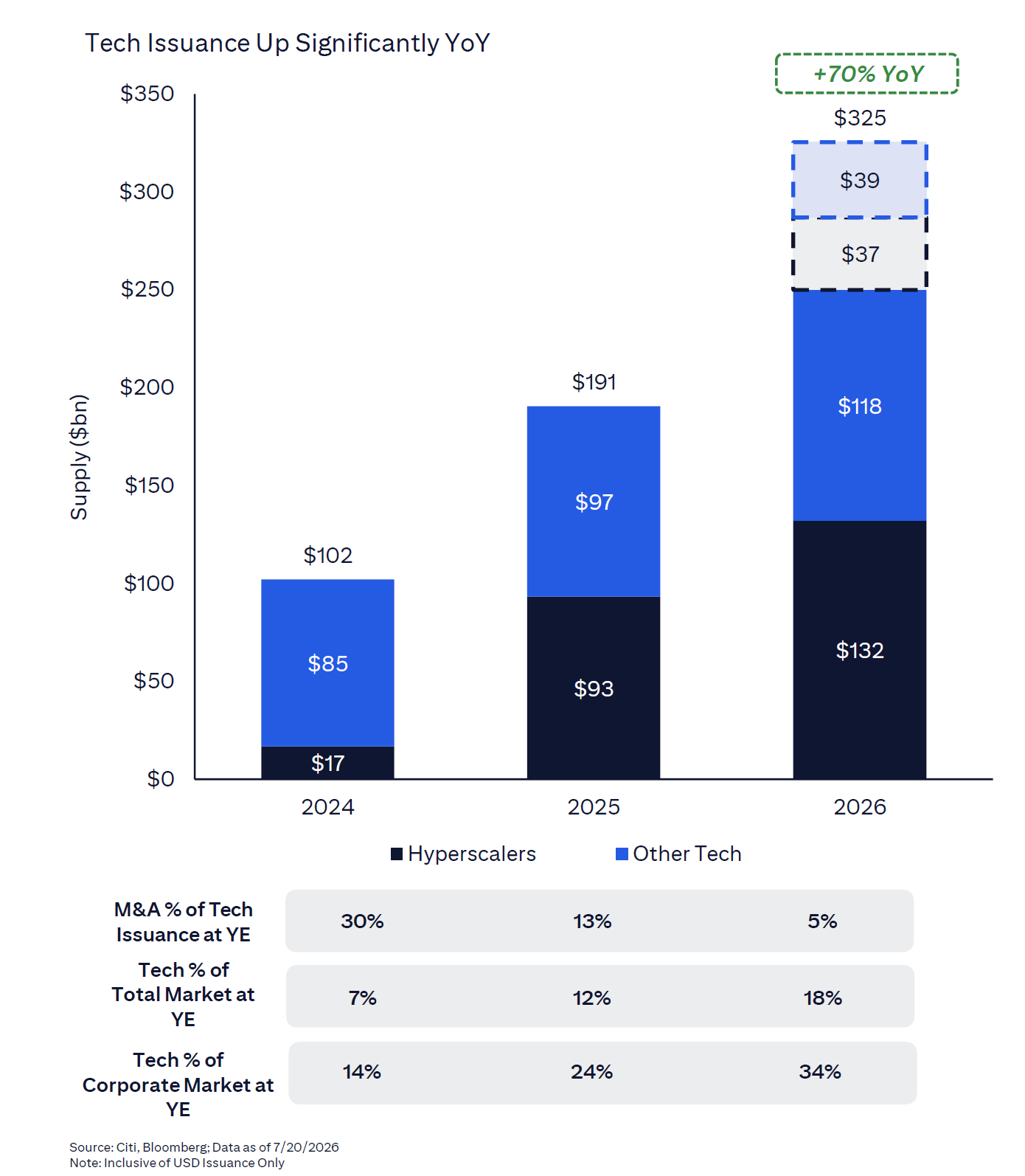
The ultimate reliance on creditworthy counterparties is a key dynamic across data center financings. Few developers have a corporate-level investment grade rating, and are often relatively recent new firms. The five listed neoclouds now have $61bn-worth of borrowing on their balance-sheets, quadruple the amount just 12 months ago, as well as $18bn-worth of operating leases (The Economist h/t Chartbook).

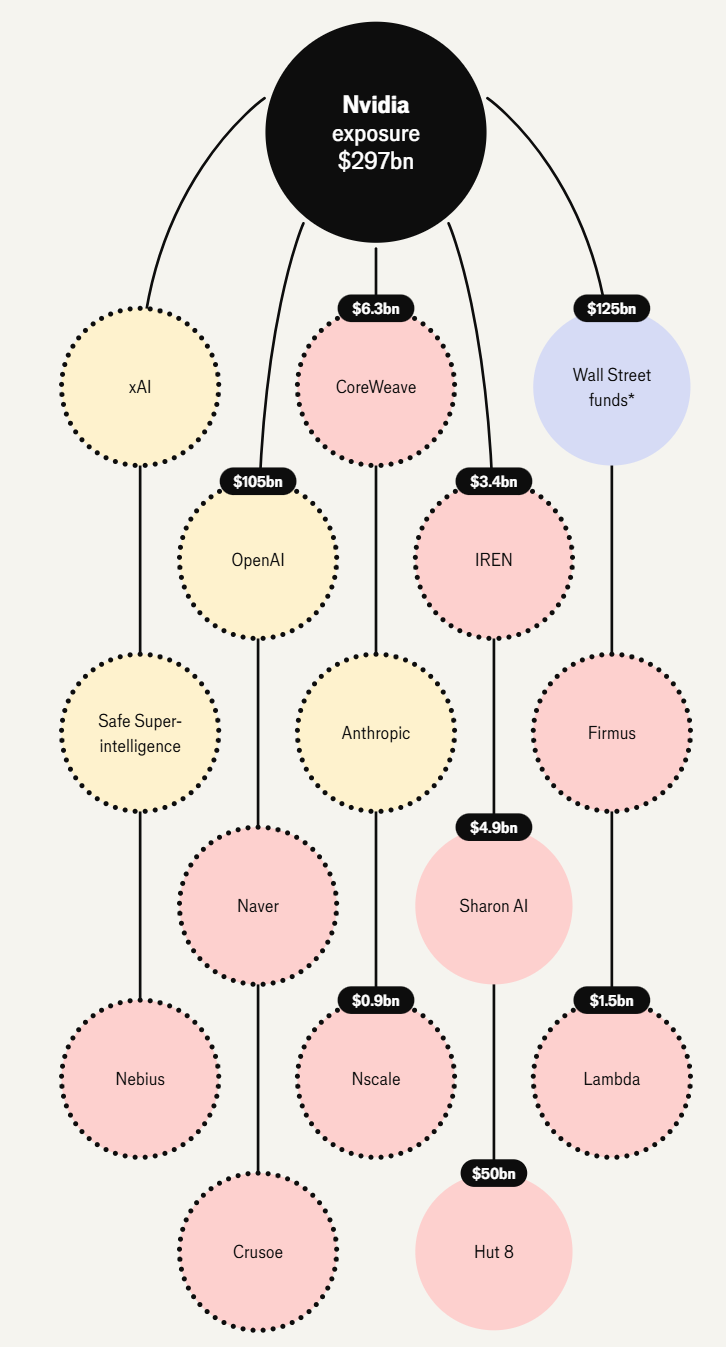
This leads many an underwriting conversation back to an investment grade tenant or guarantor, and because so many of those conversations end with the same handful of names, the credit question becomes a systemic one. Nvidia for instance has $297B of exposure to companies across the space. The increased commitments come with more rights: hyperscalers and lenders are putting greater weight on contractual “step-in rights” that can allow them to intervene when a developer falls behind (NPM).
Neighborhood watch
Last month I described the conclusion that Governor Abbott’s audit of data centers advancing through ERCOT’s interconnection process was a boon to off-grid data center projects as beguiling but half-baked. True to form, later in September Abbott directed the Texas Commission on Environmental Quality (TCEQ) to stop issuing new permits for data centers until state regulators complete an audit of facilities seeking to connect to the Texas power grid. This sweeps up behind-the-meter projects in the net. Our expectation as of now is that these actions have the potential to delay project schedules, but by months not years, and that projects will have to be of a higher standard going forward to proceed apace. The second half here is critical and seems to get missed between blasé dismissals of these interventions as pure politicking ahead of the mid-terms that will fade as quickly as they surfaced, and the blanket calls for a stop to all activity. Texas is the perfect example here where new permits will in theory start being issued again in December, just ahead of the first day of the start of the next Texas legislative session. Data centers will be on the agenda.
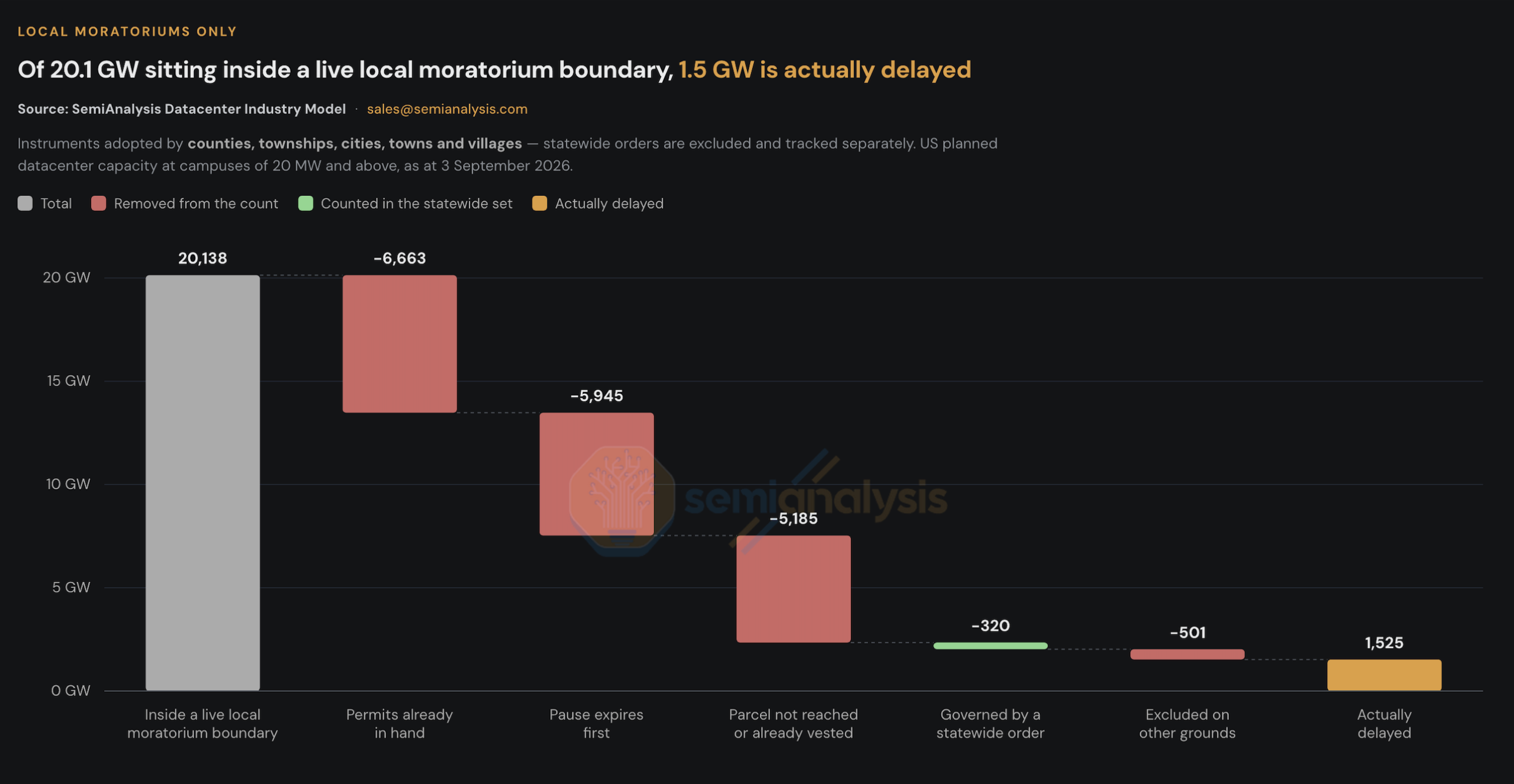
Raising standards and engaging effectively is the best path forward. Moratoriums are not yet killing the US buildout of data centers, with only 2.3GW of planned capacity “genuinely delayed” because of local moratoriums and New York’s executive order, due to gaps in their scope and their recency (SemiAnalysis). But without changes, firms will be swimming against the tide.
The climate backdrop
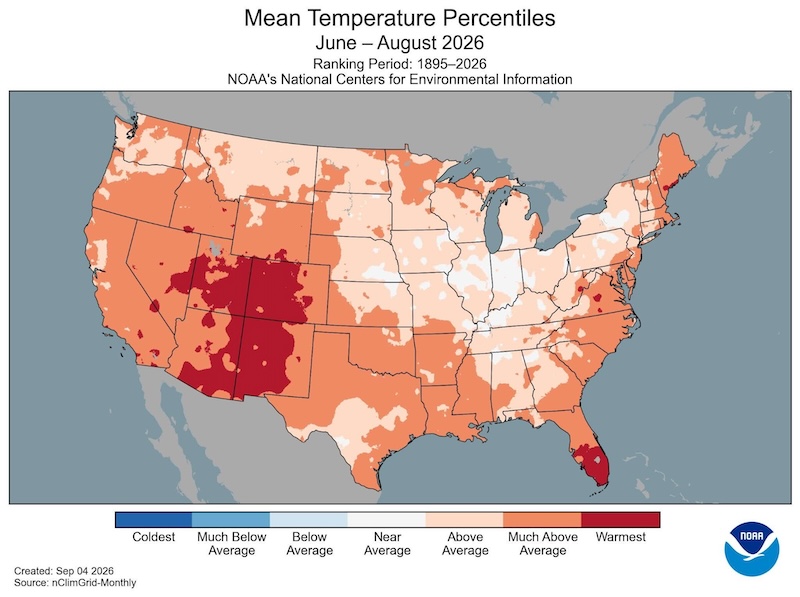
The average temperature for meteorological summer (June–August) 2026 was the warmest for the contiguous United States in the 132-year record, exceeding the previous records, set in 1936 and 2021, by 0.4°F. (NOAA/NIDIS). A record like that would once have led the news. Today, climate may seem to have fallen off the radar, displaced by data centers as the topic du jour. But the two have never been separate: action on one prompts change in the other, whether positive or negative. As September drew to a close, a bipartisan group of senators released an omnibus legislative package meant to streamline many permitting processes across the country. Both Heatmap and Green Tape have useful primers on the Bipartisan American Affordability and Jobs Act. There’s plenty of time for it to change or stall before the elections and the lame-duck session that follows. But whether it passes or not is almost beside the point. Permitting reform has been debated for four years or so, and in that time its rationale has shifted dramatically. We often lament the disconnect between Washington and the real world, but here policymakers are paying attention. Ideas we’ve covered in this newsletter, such as bring-your-own-capacity (BYOC) and conditional grid service, are now in the draft. The data center buildout may do what years of climate advocacy couldn’t: force practical grid reform that would accelerate US power decarbonization.
What we're reading
The Rise and Fall of Agent Civilizations (Dwarkesh)
Structuring Gigawatts (Occam Edge)
Why Don’t We Pay for Distribution Like Roads (The Energy Institute at Haas)
Ember’s latest annual deck is framed around The electrification of information and energy. A shared history, a shared supply chain, the same people and places, the same physics and economics.
Another “Who Pays for Data Centers” (MIT CEEPR)
A cool new visualization tool on America’s energy system (US Energy Data)
A practical framework for measuring grid utilization (Utilize Coalition)
Keep Data Centers on the Grid (Utility Watch)
More newsletters
September 2026 Newsletter
Data center financing remains widely available, but it is getting more selective, more conditional, and more expensive. Investors and lenders are also increasingly aware that despite the diversity of projects across the country, the revenues and credit flow back to a handful of companies. The dance between developers, customers, investors and lenders increasingly resembles an Eightsome Reel: energetic, seemingly chaotic but actually highly structured and unforgiving of a missed step. The financial markets are reacting to several dynamics. Many of the power projects being built to serve that demand are first of a kind, whether in structure, scale or technology; AI demand is explosive but close to impossible to forecast; government yields are climbing, with the 10-year Treasury briefly rising to 5.34%, its highest since 2002; and hyperscaler capex, forecast to exceed $1 trillion next year, is testing the depth of debt and equity markets. Unlike the reel, whose steps have changed little in a century, the form and fundamentals of data center financing are much more fluid. As Benedict Evans put it: the most dangerous words in investing are “this time is different”; the seven most dangerous words are “people always say ‘this time is different.’ It’s always different."
Read moreAugust 2026 Newsletter
Recent reporting on equipment failures and power interruptions at several early off-grid data center projects highlights genuine technical and financial risks. Furthermore, no one has enough operating history to understand how the equipment will hold up. This suggests that things will get harder before they get easier. This is not, though, a blanket argument against on-site power. It is an argument for engineering these systems differently, for engaging with a community differently.
Read moreJuly 2026 Newsletter
The data center industry continues to surprise both in terms of how quickly the status quo can change, and how resolutely many stakeholders assume the current status quo is now fixed. Eighteen months ago, fully islanded projects were more speculative than real, hyperscalers’ decarbonization bona fides were still mostly intact, and permitting was largely a formality if you followed process. Each looked settled right up until it wasn't, and expecting stability now is a curious leap.
Read more